
Khavda IV C Power Transmission Limited’s 765 kV transmission corridor to strengthen national grid amid record power demand and accelerating renewable energy expansion
Ahmedabad (Gujarat) [India], June 11: As India races toward becoming a global economic powerhouse while pursuing one of the world’s most ambitious clean energy transitions, transmission infrastructure is emerging as the critical backbone supporting the country’s growing electricity needs.
India’s electricity demand has witnessed unprecedented growth over the past decade, fuelled by rapid industrialisation, urbanisation, digitalisation, increasing household electrification, expansion of manufacturing activities, rising air-conditioning penetration and the growth of data centres and electric mobility. India’s peak power demand has increased significantly from 162 GW in 2017 to nearly 250 GW in 2024 and is expected to reach approximately 270 GW by 2026, highlighting the urgent need for stronger transmission infrastructure capable of delivering reliable power across the country.
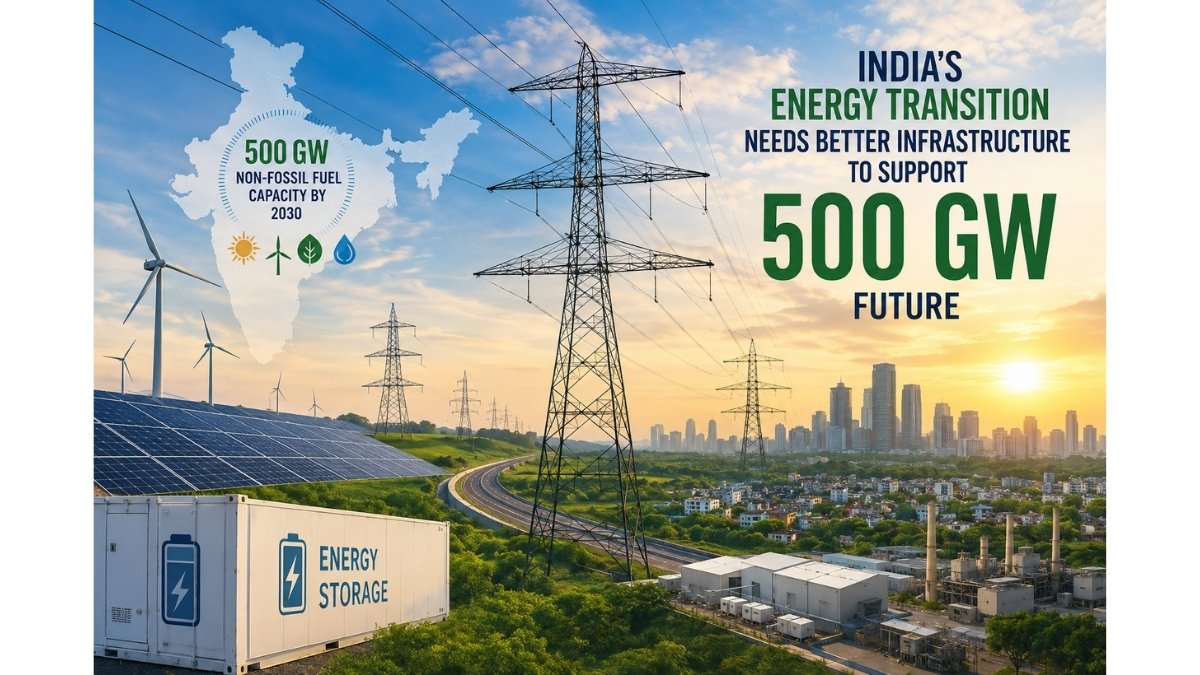
At the same time, India has set an ambitious target of achieving 500 GW of non-fossil fuel energy capacity by 2030, making it one of the largest clean energy transitions underway anywhere in the world. While solar and wind energy capacities continue to expand rapidly across states such as Gujarat, Rajasthan, Tamil Nadu and Karnataka, the success of this transition depends not only on generating clean energy but also on efficiently transporting it to major consumption centres located hundreds of kilometres away.
Industry experts increasingly emphasise that transmission infrastructure has become as critical as power generation itself. Renewable energy resources are often concentrated in specific geographies, whereas industrial clusters, commercial centres and densely populated urban regions account for the bulk of electricity consumption. A robust transmission network is therefore essential to bridge this gap, ensuring reliable, affordable and uninterrupted electricity supply across the nation.
India’s transmission sector has witnessed remarkable growth in recent years. The country currently operates more than 5 lakh circuit kilometres of transmission lines at 220 kV and above, creating one of the world’s largest interconnected power grids. These transmission networks facilitate seamless transfer of electricity between regions, improve grid stability, reduce transmission losses and strengthen national energy security.
Recognising the strategic importance of transmission infrastructure in India’s energy future, the Central Electricity Authority (CEA) has unveiled a long-term transmission development roadmap requiring investments of approximately ₹7.93 lakh crore. The roadmap aims to integrate more than 900 GW of non-fossil fuel generation capacity by FY36 and includes substantial additions to the country’s transmission network to support future electricity demand and renewable energy integration.
Against this backdrop, Khavda IV C Power Transmission Limited is developing a strategically significant 258-km, 765 kV double-circuit transmission line connecting South Olpad (GIS) in Gujarat with Boisar-II (GIS) in Maharashtra. The project is designed to strengthen interstate power transfer capabilities, enhance grid reliability and facilitate efficient evacuation and transmission of electricity across western India.
The transmission corridor forms an important component of India’s evolving power infrastructure and contributes to the country’s broader objective of building a resilient and future-ready electricity network. High-capacity 765 kV transmission systems are globally recognised for their ability to transmit large volumes of electricity over long distances with greater efficiency and lower technical losses, making them particularly important for integrating renewable energy into the grid.
The benefits of such infrastructure extend far beyond the power sector. Reliable electricity enables industrial productivity, supports manufacturing growth, powers digital infrastructure and data centres, improves healthcare and educational facilities, strengthens agricultural operations and enhances overall quality of life for millions of citizens. As India continues to urbanise and industrialise, transmission infrastructure will play a vital role in sustaining economic growth while ensuring equitable access to energy.
Furthermore, strengthened transmission networks help optimise power generation resources, reduce regional supply-demand imbalances, improve electricity market efficiency and support the development of a unified national power market. They also provide greater resilience against disruptions and facilitate the integration of renewable energy sources into the grid at scale.
Through the South Olpad–Boisar-II transmission project, Khavda IV C Power Transmission Limited is contributing to India’s long-term energy security, renewable energy ambitions and infrastructure development agenda. The project aligns closely with the nation’s vision of achieving 500 GW of non-fossil fuel capacity by 2030 while supporting the growing power requirements of households, industries and businesses across the country.
Alongside this critical infrastructure development, the company continues to undertake community engagement initiatives focused on rural development, livelihood enhancement, environmental sustainability and social well-being, ensuring that infrastructure-led growth creates meaningful and lasting value for local communities.
If you object to the content of this press release, please notify us at [email protected]. We will respond and rectify the situation within 24 hours.